Home Workout Equipment Essentials for Weight Loss

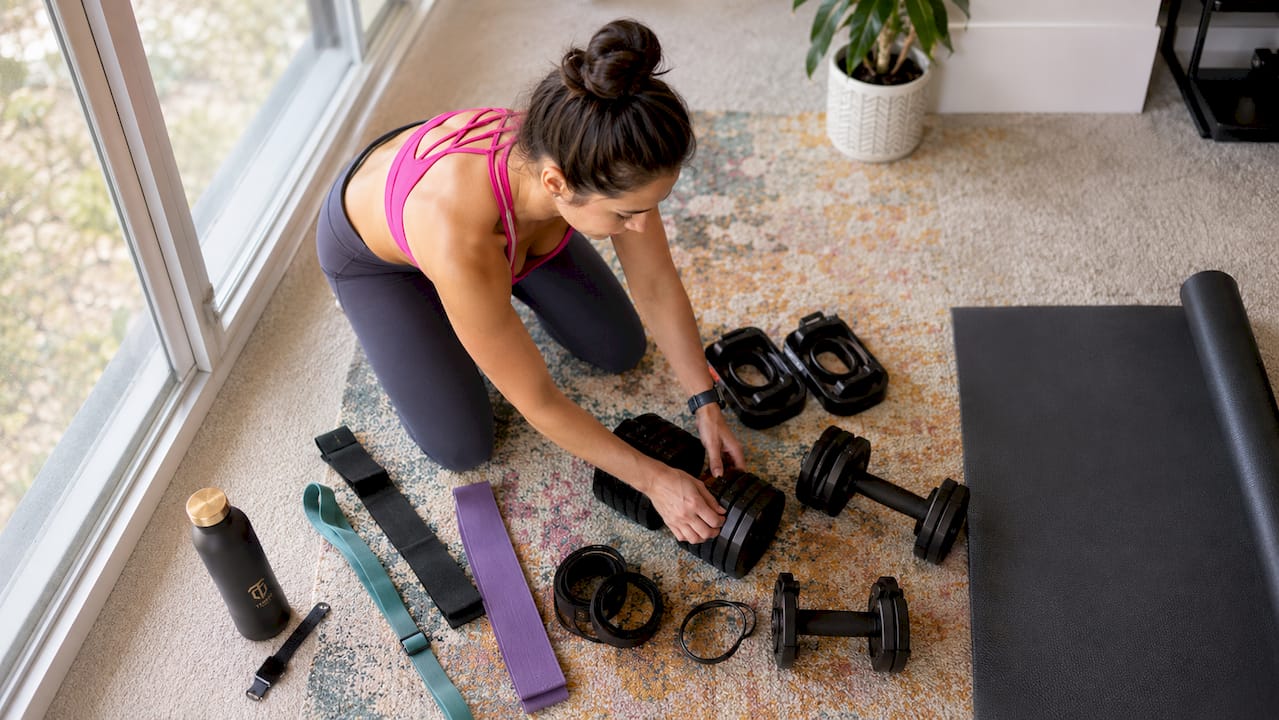
Home workout equipment essentials are the core tools that let you build real strength, burn fat, and train consistently without a gym membership. The most effective minimal setup includes adjustable dumbbells, resistance bands, a pull-up bar, and a workout mat. These four items support compound movements, progressive overload, and metabolic conditioning. A well-chosen home fitness tools list can cover the vast majority of beginner and intermediate training needs for under $500, and in many cases, far less.
1. Adjustable dumbbells
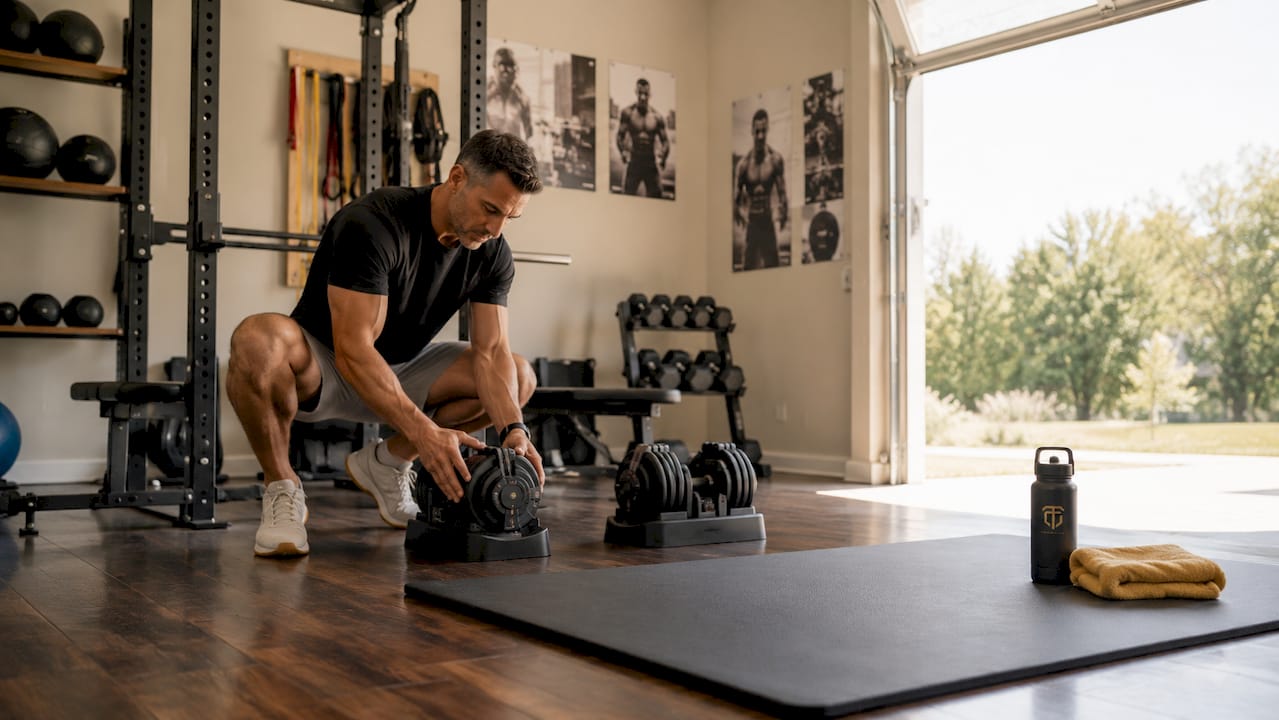
Adjustable dumbbells are the single most versatile piece of must-have home gym gear you can buy. A quality pair going up to 50 lbs replaces many fixed weights and costs between $250 and $400. That range covers presses, rows, curls, lunges, and Romanian deadlifts without requiring a full rack of individual weights. The space savings alone make them worth the investment for anyone training in a bedroom, garage, or apartment.
Pro Tip: Buy adjustable dumbbells with a weight range that extends at least 20 lbs beyond your current working weight. You will grow into them faster than you expect.
2. Resistance bands
Resistance bands are the most affordable item on any home fitness tools list, and they pull more weight than their price suggests. A full set of loop bands and a long tube band costs under $30 and fits in a drawer. You can use loop resistance bands for hip activation, pull-apart drills, and added tension on squats and presses. An adjustable resistance band extends that utility to rows, lat pulldowns, and bicep curls when no cable machine is available.
Bands also serve a recovery function. Light band work between heavy sessions keeps blood moving to sore muscles without adding load. That dual role makes them one of the highest-value items in any home setup.
3. Doorway pull-up bar
A doorway pull-up bar costing around $25–$30 delivers the highest return on investment for upper body strength of any single piece of equipment. Pull-ups and chin-ups train the lats, biceps, rear deltoids, and core simultaneously. No machine replicates that compound demand at that price point.
The most effective way to use a pull-up bar at home is the “grease-the-groove” method. Frequent, low-fatigue sets spread throughout the day build strength faster than one exhausting daily session. You hang the bar in a doorway you pass often, and you do two to four reps every time you walk through. Within weeks, your pull-up count climbs without a single dedicated workout.
4. Workout mat
A workout mat protects your joints and gives you a defined training space. For floor exercises like planks, push-ups, sit-ups, and stretching, a standard yoga mat works well. The key spec is thickness: 6mm or more cushions your spine and knees on hard floors.
Floor protection becomes more critical when you add weight. Horse stall mats at roughly $50–$60 each outperform consumer fitness mats in durability and impact absorption for barbell work. Standard EVA foam mats compress and crack under heavy loads. If you plan to deadlift or drop weights, horse stall mats are the correct choice, not a luxury upgrade.
5. Adjustable bench
An adjustable bench expands your training options more than almost any other single item. Flat, incline, and decline positions let you hit the chest, shoulders, and triceps from multiple angles with dumbbells. Without a bench, dumbbell pressing is limited to the floor, which cuts the range of motion short.
A foldable adjustable bench stores vertically against a wall and takes up less than two square feet of floor space. That makes it practical even in small apartments. Pair it with adjustable dumbbells and you have a complete upper body training station.
6. How to build your setup by budget
The best approach to assembling best home gym equipment for training is to build in stages. Spending everything at once on specialty gear before you have a consistent habit is the most common and costly mistake beginners make.
Under $200: A yoga mat, a set of resistance bands, and a doorway pull-up bar cover the core. A minimal setup at this price point covers roughly 90% of beginner training needs. Add a pair of medium-weight fixed dumbbells and you have a complete starter kit.
$400–$600: Add adjustable dumbbells and a foldable bench. This mid-level setup handles most strength training goals and supports progressive overload across all major muscle groups.
$600–$1,000: A power rack with safety bars, a 7-foot Olympic barbell, and weight plates form the foundational strength setup at this tier. This configuration pays for itself compared to a gym membership within two years and supports barbell squats, deadlifts, bench press, and overhead press.
Pro Tip: Buy used barbells and weight plates from Facebook Marketplace or Craigslist. Cast iron plates hold their value and rarely wear out. You can often find a full barbell set for half the retail price.
Budget | Core equipment | Best for |
Under $200 | Mat, bands, pull-up bar | Beginners, bodyweight focus |
$400–$600 | Add adjustable dumbbells, bench | Intermediate strength training |
$600–$1,000 | Add power rack, barbell, plates | Serious strength and fat loss |
7. Equipment choices that directly support weight loss
The most important insight in any weight loss equipment discussion is this: strength equipment beats cardio machines for fat loss. Compound lifts with barbells, dumbbells, and racks create higher metabolic demand than steady-state cardio. They build muscle, which raises your resting metabolic rate. A treadmill burns calories during the session. A barbell changes your body composition permanently.
Strength training equipment that enables compound lifts provides superior metabolic benefits for fat loss compared to isolated cardio machines. That means your $300 spent on adjustable dumbbells and a bench outperforms a $1,200 treadmill for long-term weight loss results.
Specific gear choices that maximize fat loss at home:
Barbell and plates: Squats, deadlifts, and rows burn the most calories per set of any exercise.
Adjustable dumbbells: Dumbbell complexes (a series of exercises done back-to-back with no rest) spike heart rate and build muscle simultaneously.
Resistance bands: Band circuits between strength sets keep heart rate elevated without adding joint stress.
Proper flooring: Horse stall mats protect your floor and allow you to deadlift safely at home, which is the single best fat-loss lift available.
Consistency matters more than any individual piece of gear. Equipment that fits your space and budget gets used. Equipment that feels like a burden gets ignored. Prioritize building an accountability routine around whatever gear you own before adding more.
8. Accessories and upgrades worth adding later
Beginners should delay purchasing niche equipment like cable pulleys, medicine balls, and specialty bars until foundational strength training is well established. Specialty accessories provide minimal return before a consistent training habit forms. Buying too much too soon creates clutter and decision fatigue, both of which reduce training frequency.
Once you have three to six months of consistent training with your foundational gear, these additions deliver real value:
Foam roller: Speeds recovery between sessions and reduces muscle soreness. A basic 12-inch foam roller costs under $20.
Fractional plates: Small weight increments (0.25 lb to 1.25 lb) allow micro-progression on lifts where jumping 5 lbs is too much. Critical for overhead press and bench press.
Chalk: Improves grip on deadlifts and pull-ups without requiring gloves. A block of gym chalk costs under $5.
Cable pulley attachment: Mounts to a power rack and adds cable exercises like tricep pushdowns and face pulls. Useful after you own a rack.
Cardio equipment: A jump rope costs under $15 and delivers high-intensity cardio in minimal space. Add a stationary bike or rower only if you genuinely enjoy those modalities and have the space.
Pro Tip: Evaluate every accessory purchase with one question: does this let me do something I cannot already do with what I own? If the answer is no, wait.
Versatility per dollar is the best metric for home gym value. Equipment that supports multiple movement patterns and progressive overload beats single-purpose machines every time.
Key takeaways
The most effective home workout equipment essentials are adjustable dumbbells, resistance bands, a pull-up bar, and a workout mat because they support compound movements, progressive overload, and fat loss within a budget under $500.
Point | Details |
Start under $200 | A mat, bands, and pull-up bar cover 90% of beginner training needs. |
Strength beats cardio gear | Compound lifts with dumbbells and barbells outperform treadmills for fat loss. |
Adjustable dumbbells first | A pair up to 50 lbs replaces a full rack and costs $250–$400. |
Delay specialty accessories | Build a consistent habit before adding cable pulleys or medicine balls. |
Floor protection matters | Horse stall mats at $50–$60 each are the correct choice for barbell work. |
What I have learned from building home gyms with real people
Most people overthink this. They spend weeks researching equipment and months waiting until they have the “perfect” setup. The clients I work with at Terpinfit who make the fastest progress are the ones who started with a pull-up bar, a set of bands, and a pair of dumbbells. That is it. They trained consistently with those three items for months before adding anything else.
The mistake I see most often is buying a treadmill or elliptical first. Cardio machines feel productive because they have screens and calorie counters. But they do not build muscle, and muscle is what drives long-term fat loss. I have watched people spend $1,500 on a treadmill and then plateau within 90 days because their body composition never changed. The same $1,500 spent on a barbell, rack, and adjustable dumbbells would have produced a completely different result.
The second mistake is buying too much at once. A garage full of equipment you do not know how to use is not a gym. It is a storage problem. Start with the strength training basics and add gear only when you have outgrown what you own. That approach builds both fitness and confidence at the same pace.
Quality matters more than quantity. One pair of well-built adjustable dumbbells will outlast three cheap fixed-weight sets. Buy the best version of the fewest items, and you will never regret it.
— Marc
How Terpinfit helps you get more from your home setup
Owning the right gear is only part of the equation. Knowing exactly how to use it, in the right order, at the right intensity, is what produces results. Terpinfit offers both online and in-person personal training in Pensacola, Florida, and works with clients who train entirely from home.
A Terpinfit trainer helps you select the equipment that fits your space and goals, then builds a program around what you own. No guesswork, no wasted purchases, and no wasted sessions. Whether you are starting with a $150 setup or building toward a full home gym, personalized guidance closes the gap between owning equipment and actually progressing. Reach out through the Terpinfit personal trainer page or submit your details on the services inquiry page to get started.
FAQ
What equipment do I need for home workouts as a beginner?
A yoga mat, resistance bands, and a doorway pull-up bar cover the core needs for under $200. Add a pair of adjustable dumbbells when your budget allows and you have a complete beginner setup.
Is home gym equipment enough for weight loss?
Yes. Strength equipment like dumbbells and a barbell creates higher metabolic demand than most cardio machines and produces better body composition results over time.
How much does a functional home gym cost?
A minimal but effective setup costs under $200. A mid-level setup with adjustable dumbbells and a bench runs $400–$600. A full foundational setup with a power rack and barbell costs $600–$1,000.
Are resistance bands worth buying for home workouts?
Resistance bands are one of the highest-value items in any home fitness tools list. They cost under $30, support dozens of exercises, and serve both strength and recovery purposes.
What is the best first piece of home gym equipment to buy?
A doorway pull-up bar at $25–$30 delivers the highest return on investment for upper body strength. Pair it with a resistance band set and you have a full upper body training system for under $60.
Recommended
Comments