What Is Functional Fitness and Why It Matters

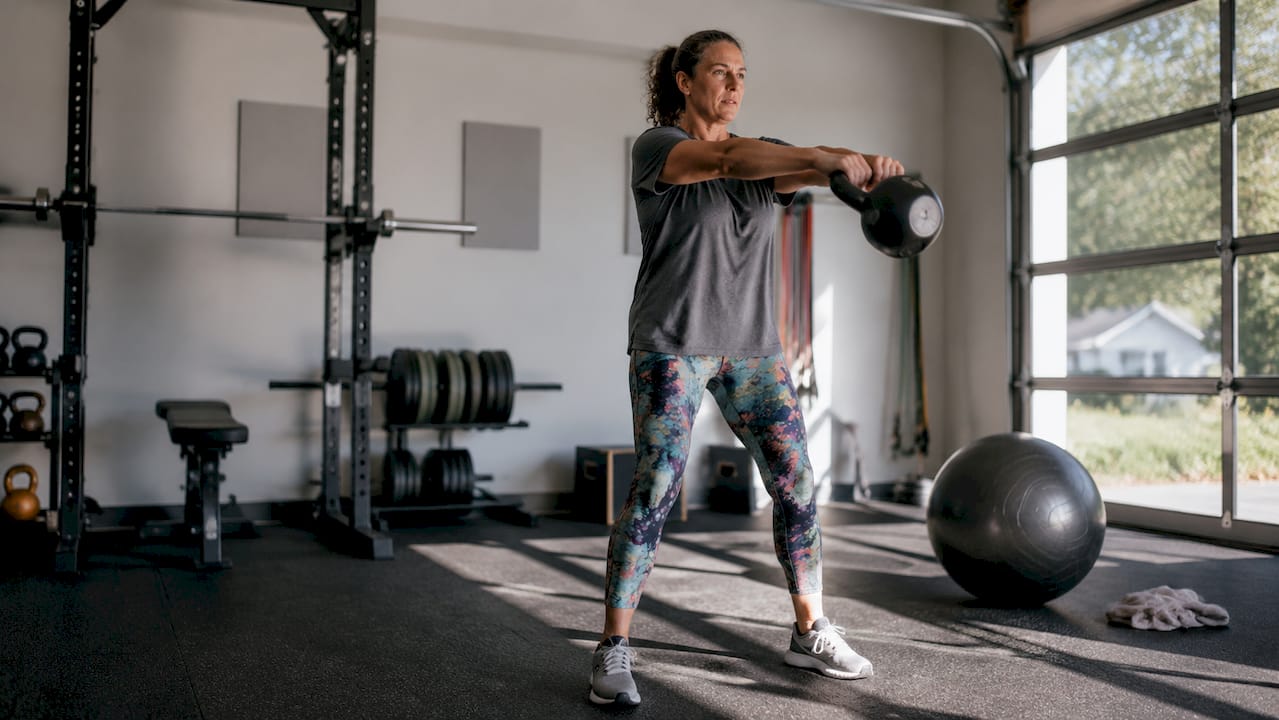
Functional fitness is training designed to improve your ability to perform real-world daily movements efficiently and safely. Unlike workouts that isolate a single muscle, functional fitness uses multi-joint compound movements that prepare your body for the physical demands of everyday life. Squatting to pick up a box, carrying groceries, climbing stairs, and reaching overhead are all movements functional training directly improves. The approach originated in physical therapy to rehabilitate athletes, prioritizing movement quality over raw load. For beginners and fitness enthusiasts alike, it delivers measurable gains in strength, balance, mobility, and injury prevention.
What is functional fitness and how does it work?
Functional fitness is defined as a training method that develops strength, coordination, and mobility through movements that mirror real-life activities. The core principle is simple: train the way your body actually moves, not just the way machines allow it to move. Every exercise targets multiple joints and muscle groups working together, which is exactly how your body functions outside the gym.
Traditional strength training often relies on isolation exercises, like a leg extension machine or a bicep curl, that work one muscle at a time. Functional training replaces or supplements those with compound, multi-planar movements that demand coordination, stability, and motor control simultaneously. The difference shows up fast in daily life. A person who trains functionally can carry a heavy bag, twist to grab something from a back seat, or recover balance on uneven ground far better than someone who only trains on machines.
Functional fitness also places a higher demand on your core. Every squat, lunge, and loaded carry requires your core to stabilize the movement, which builds the kind of full-body coordination that isolated resistance training simply does not develop.
How does functional fitness differ from traditional strength training?
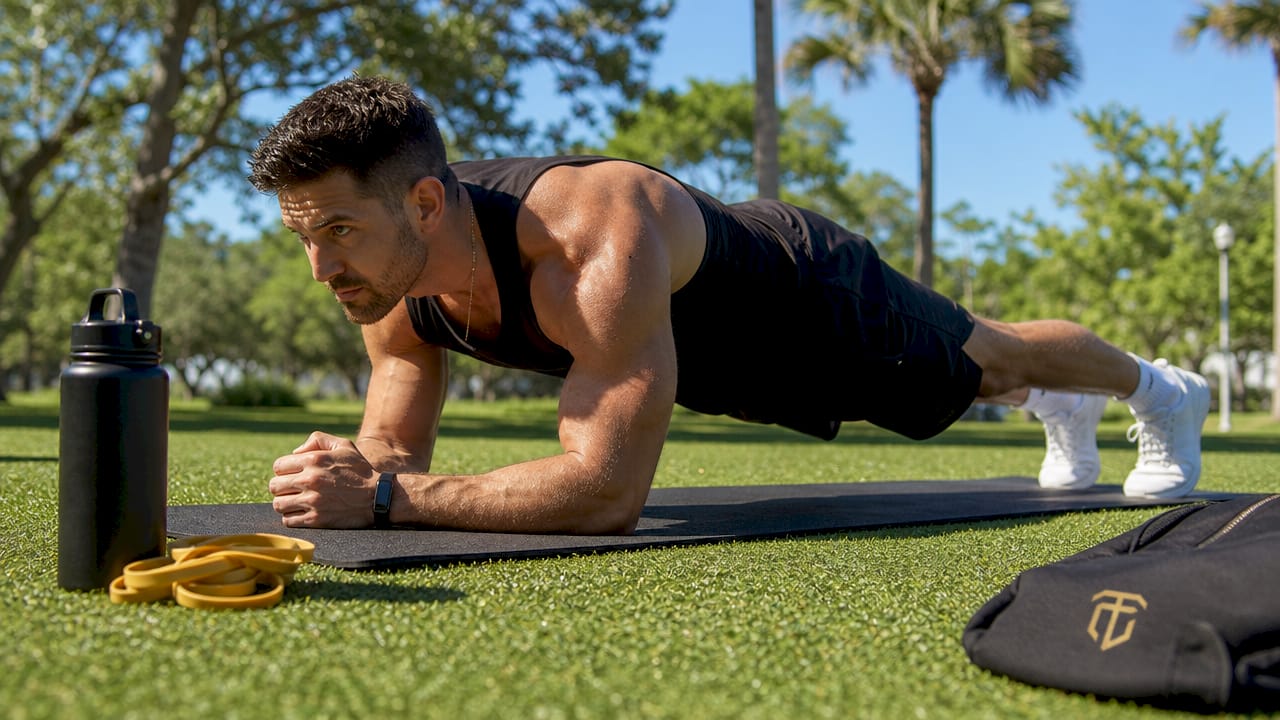
The clearest difference is movement pattern versus muscle group. Traditional bodybuilding programs organize workouts by muscle: chest day, back day, leg day. Functional training organizes workouts by movement: push, pull, squat, hinge, carry, and rotate.
Key contrasts between the two approaches:
Equipment: Functional training favors bodyweight, free weights, kettlebells, resistance bands, and medicine balls. Traditional training leans heavily on fixed machines.
Movement planes: Functional exercises move through multiple planes (forward, sideways, rotational). Most machine exercises move in a single plane.
Stability demand: Functional movements require your stabilizer muscles to engage constantly. Machines provide external support, removing that demand.
Coordination: Functional fitness trains your nervous system to coordinate multiple muscle groups at once. Isolation training does not.
Origin: Functional fitness developed from physical therapy, where the goal was always restoring real-world movement, not building muscle size.
Pro Tip: If you are new to free weights, start with bodyweight versions of each movement pattern before adding any load. Your nervous system needs to learn the pattern first.
The result is that functional fitness builds strength you can actually use. A strong squat pattern means you can lift heavy objects safely. A strong hinge means your lower back is protected every time you bend over.
What are common examples of functional fitness exercises?
The six foundational movement patterns in functional training are squat, hinge, push, pull, carry, and rotate. Every exercise in a functional program maps back to one or more of these patterns.
Practical examples by movement pattern:
Squat: Goblet squat, bodyweight squat, split squat. These mimic sitting, standing, and lowering to pick something up.
Hinge: Deadlift, Romanian deadlift, kettlebell swing. These train the posterior chain for safe bending and lifting.
Push: Push-up, overhead press, dumbbell chest press. These replicate pushing open a door or placing something on a high shelf.
Pull: Bent-over row, lat pulldown, inverted row. These build the pulling strength used when opening drawers or lifting bags.
Carry: Farmer’s carry, suitcase carry, overhead carry. These directly simulate carrying groceries, luggage, or children.
Rotate: Pallof press, cable woodchop, medicine ball rotational throw. These train the twisting movements used in almost every sport and daily task.
Balance and agility exercises like single-leg stands, lateral shuffles, and step-ups also belong in a functional program. They train the stabilization and reaction speed your body needs on unpredictable terrain.
Pro Tip: Master the six movement patterns with bodyweight before adding resistance. This prevents the most common beginner mistakes that lead to minor injuries and early burnout.
Beginners can start with a bodyweight squat and a push-up. Intermediate trainees add a kettlebell deadlift and a dumbbell row. Advanced trainees layer in loaded carries and rotational power work. The progression is logical and the movements stay relevant at every level.
What are the proven benefits of functional fitness?
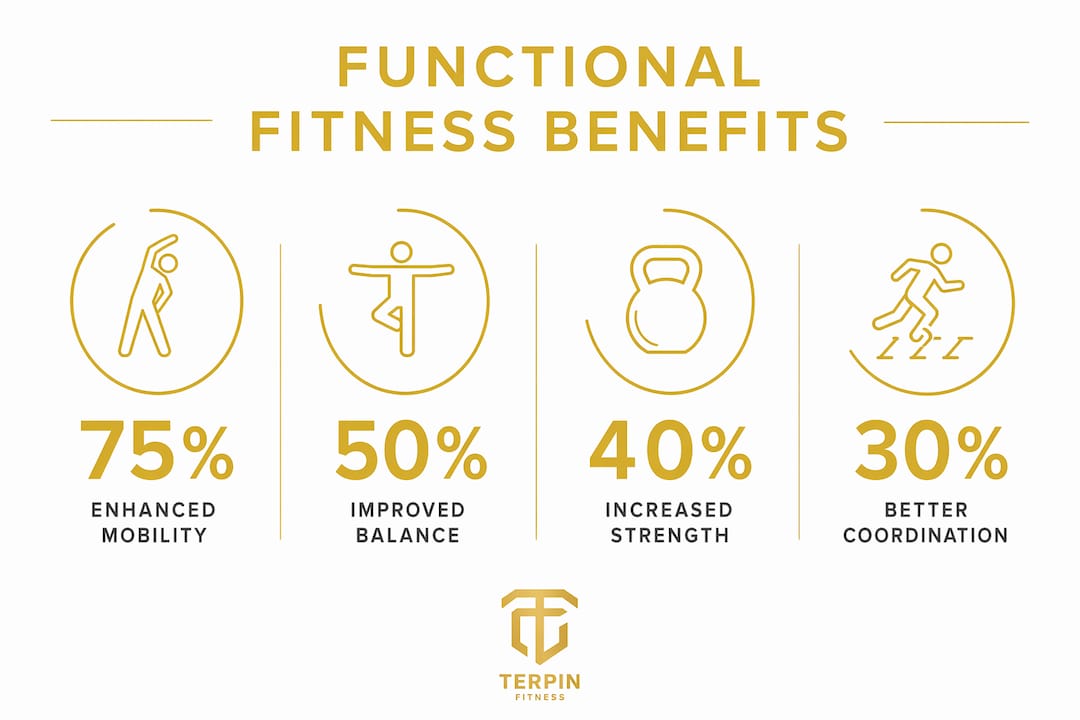
The research on functional fitness benefits is consistent across age groups and fitness levels. Three sessions per week for 8 weeks significantly improves balance and functional movement in middle-aged adults. That is a relatively short commitment for a meaningful physical change.
Programs lasting at least 12 weeks produce even stronger results. Functional training programs of 12 or more weeks outperform shorter programs in improving strength, power, and agility in healthy adults. Consistency over time is the real driver of results, not intensity.
The benefits extend well beyond the gym:
Benefit | What it means for you |
Improved balance | Reduces fall risk and improves stability on uneven surfaces |
Greater strength | Supports daily tasks like lifting, carrying, and climbing stairs |
Better agility | Faster reaction time and safer movement in unpredictable situations |
Injury prevention | Stronger stabilizer muscles protect joints during everyday activities |
Mental health gains | Physical independence reduces anxiety and depression in older adults |
The mental health connection is particularly significant. Functional fitness improves mental health in adults over 70 by maintaining mobility and reducing anxiety and depression symptoms linked to impaired movement. Physical independence is a direct predictor of psychological well-being.
“Muscle mass and strength begin to decline around age 30, with steeper losses after 60. Functional fitness is one of the most effective tools for slowing that decline and preserving the mobility that keeps older adults independent.” — UCLA Health
This makes functional fitness especially critical for healthy aging. The earlier you build functional strength, the more reserve capacity you carry into your later decades.
How to safely start a functional fitness routine
Starting functional fitness the right way matters more than starting fast. The most common mistake beginners make is adding weight before mastering the movement pattern. That shortcut leads to poor mechanics, wasted effort, and minor injuries that derail progress.
Follow these steps to build a safe and effective routine:
Learn the six patterns first. Spend your first two weeks practicing bodyweight squats, hinges, push-ups, rows, carries, and rotational movements. Focus entirely on form.
Add load gradually. Once your form is consistent, introduce light resistance. A 5-pound increase per week is enough for most beginners.
Train three times per week. Research supports three weekly sessions as the minimum effective dose for measurable improvement in balance and functional movement.
Commit to at least 12 weeks. Short programs produce short results. Lasting improvements in strength, agility, and power require consistent effort over three months or more.
Get a movement assessment. A qualified trainer can identify movement compensations before they become injuries. This step is especially valuable if you have any history of joint pain or limited mobility.
Avoid training to failure early on. Functional fitness demands motor control. Fatigue degrades form, and degraded form in compound movements creates injury risk.
A strength training basics guide can help you understand the foundational principles before your first session. Knowing why each movement matters makes it easier to stay consistent when the novelty wears off.
Key Takeaways
Functional fitness builds real-world strength through compound, multi-joint movements, and programs lasting 12 or more weeks deliver the most lasting gains in strength, balance, and mobility.
Point | Details |
Core definition | Functional fitness trains movement patterns, not isolated muscles, to improve daily life performance. |
Program duration | Committing to 12 or more weeks produces stronger results than shorter training blocks. |
Six foundational patterns | Squat, hinge, push, pull, carry, and rotate cover every movement your body needs. |
Aging and independence | Muscle decline starts around age 30, making functional training critical for long-term mobility. |
Mental health link | Maintaining physical independence through functional fitness reduces anxiety and depression in older adults. |
Why I think most beginners underestimate functional fitness
Most people who walk into a gym for the first time gravitate toward machines. They feel safe, the weight is easy to control, and the movement is guided. I get it. But that comfort comes at a cost.
What I have seen working with clients at Terpinfit is that the people who start with machines often plateau quickly. They build strength in a narrow range of motion that does not transfer to anything outside the gym. The person who can leg press 300 pounds but struggles to get up off the floor without using their hands is a real pattern I see regularly.
Functional fitness fixes that gap. When a client masters the goblet squat and the Romanian deadlift, they stop throwing their back out moving furniture. When they add loaded carries, their posture improves and their shoulder pain fades. The changes show up in life, not just on a weight chart.
The other thing I tell beginners: do not confuse functional fitness with high-intensity group classes. Functional training can be quiet, controlled, and methodical. The goal is movement quality, not sweat volume. A 45-minute session of well-executed compound movements beats an hour of sloppy, exhausting circuits every time.
If you are in Pensacola or training online, Terpinfit builds programs around this exact principle. The results speak for themselves, and they show up faster than most people expect.
— Marc
Terpinfit’s approach to functional fitness training
Terpinfit offers both online and in-person personal training in Pensacola, Florida, with programs built around functional fitness principles from day one. Every client starts with a movement assessment to identify weaknesses and build a plan that fits their actual life, not a generic template.
Whether you are a complete beginner or a fitness enthusiast looking to move better and perform at a higher level, Terpinfit designs programs that progress at the right pace. The focus is always on movement quality first, then strength, then performance. You can view training services or reach out directly to schedule a personal training consultation and get a plan built around your goals.
FAQ
What is functional fitness in simple terms?
Functional fitness is training that improves your ability to perform everyday movements like lifting, carrying, bending, and climbing. It uses compound, multi-joint exercises rather than isolated muscle work.
How is functional training different from regular gym workouts?
Functional training focuses on movement patterns (squat, hinge, push, pull, carry, rotate) rather than individual muscles. It uses free weights and bodyweight instead of fixed machines, which builds coordination and stability alongside strength.
How long does it take to see results from functional fitness?
Three sessions per week for 8 weeks produces measurable improvements in balance and movement. Programs lasting 12 or more weeks deliver the strongest gains in strength, power, and agility.
Is functional fitness good for beginners?
Functional fitness is well suited for beginners because it starts with bodyweight movements and scales gradually. Mastering form before adding resistance is the key rule that keeps beginners safe and progressing.
Does functional fitness help with aging?
Functional fitness directly counters the muscle and strength decline that begins around age 30. For adults over 60, it preserves mobility, reduces fall risk, and supports the physical independence that protects mental health.
Recommended
Comments