What Is a Personalized Weight Loss Plan?


A personalized weight loss plan is a customized strategy built around your unique biology, lifestyle, and health goals rather than a generic calorie formula applied to everyone. Unlike standard diets, individualized weight management accounts for your metabolism, food preferences, medical history, and daily schedule. The NIH Body Weight Planner and Mayo Clinic both recognize that tailored approaches produce better long-term results than one-size-fits-all programs. People following these plans typically lose 6–10 pounds in the first two weeks and about 13% of body weight within six months. That kind of outcome does not happen by accident.
What is a personalized weight loss plan, and how does it work?
A personalized weight loss plan is a structured program that combines nutrition, physical activity, and behavior strategies tailored specifically to you. The core idea is simple: your body is not identical to anyone else’s, so your plan should not be either. Effective personalization starts with a clear picture of your current health, then builds a plan that fits your real life.
Three elements define every solid personalized plan:
Nutrition targets: Calorie and macronutrient goals based on your body composition, not a generic 2,000-calorie standard.
Physical activity: Exercise type, frequency, and intensity matched to your fitness level, schedule, and any physical limitations.
Behavior strategies: Techniques that address emotional eating, stress responses, and social pressures that derail most diets.
The term “individualized weight management” is the recognized clinical phrase for this approach. You will hear it used by registered dietitians, bariatric physicians, and certified personal trainers. The SEO phrase “personalized weight loss plan” describes the same concept in everyday language.
Pro Tip: Before starting any plan, get a baseline body composition measurement. Even a simple body fat percentage reading gives you a far more useful starting point than scale weight alone.
How do personalized plans differ from generic diets?
Generic diets fail mainly because they ignore genetics, hormones, and metabolism. A plan that works for your coworker may produce zero results for you, even if you follow it perfectly. That is not a willpower problem. It is a biology problem.

Generic programs apply the same calorie targets, food lists, and exercise schedules to every person who signs up. They do not account for insulin sensitivity, thyroid function, cortisol levels, or gut microbiome differences. These factors directly affect how your body stores and burns fat. Ignoring them is why most commercial diets produce short-term results that reverse within a year.
Personalized plans take a different approach:
Genetic and hormonal factors: A custom weight loss plan considers how your body responds to carbohydrates, fats, and proteins individually.
Body composition data: Data-driven baselines like DEXA scans or bioelectrical impedance analysis replace guesswork with measurable targets.
Blood work: Markers like fasting glucose, thyroid hormones, and lipid panels reveal metabolic conditions that change your caloric needs.
Lifestyle fit: A plan that ignores your work schedule, food budget, or cooking ability will not last past week three.
The result is a program you can actually follow because it was built for you, not for a statistical average.
Pro Tip: Ask your doctor for a full metabolic panel before starting a new weight loss program. Thyroid issues and insulin resistance are common and often undiagnosed. Treating them first can make your plan dramatically more effective.
Key components of an effective personalized weight loss plan
Building a solid individualized plan requires more than cutting calories. The process follows a logical sequence that connects your starting point to a realistic, sustainable goal.
Establish your caloric baseline. Use a validated tool like the NIH Body Weight Planner to calculate your total daily energy expenditure. This gives you an accurate starting number, not a rough estimate.
Set a moderate calorie deficit. A safe deficit of 300–500 calories below your daily expenditure produces roughly 0.5 to 1 kilogram of fat loss per week. Larger deficits trigger metabolic adaptation and muscle loss, which slows progress over time.
Set macronutrient targets. Protein, carbohydrate, and fat ratios should reflect your activity level, health conditions, and food preferences. Higher protein intake, typically 0.7 to 1 gram per pound of body weight, preserves muscle during a calorie deficit.
Integrate behavior change strategies. Behavioral support addresses emotional eating, stress-driven food choices, and social situations that undermine adherence. Without these tools, many plans collapse within six months.
Build in progress monitoring. Track body composition, not just scale weight, every four weeks. Adjust calories and macros based on actual results, not assumptions.
Plan for plateaus. Weight loss always slows. Effective plans evolve by modifying macronutrients or activity levels when progress stalls, rather than abandoning the program entirely.
The sequence matters. Skipping the baseline assessment or ignoring behavior strategies produces the same outcome as a generic diet: short-term results followed by regain.
How to tailor your plan to your lifestyle and preferences
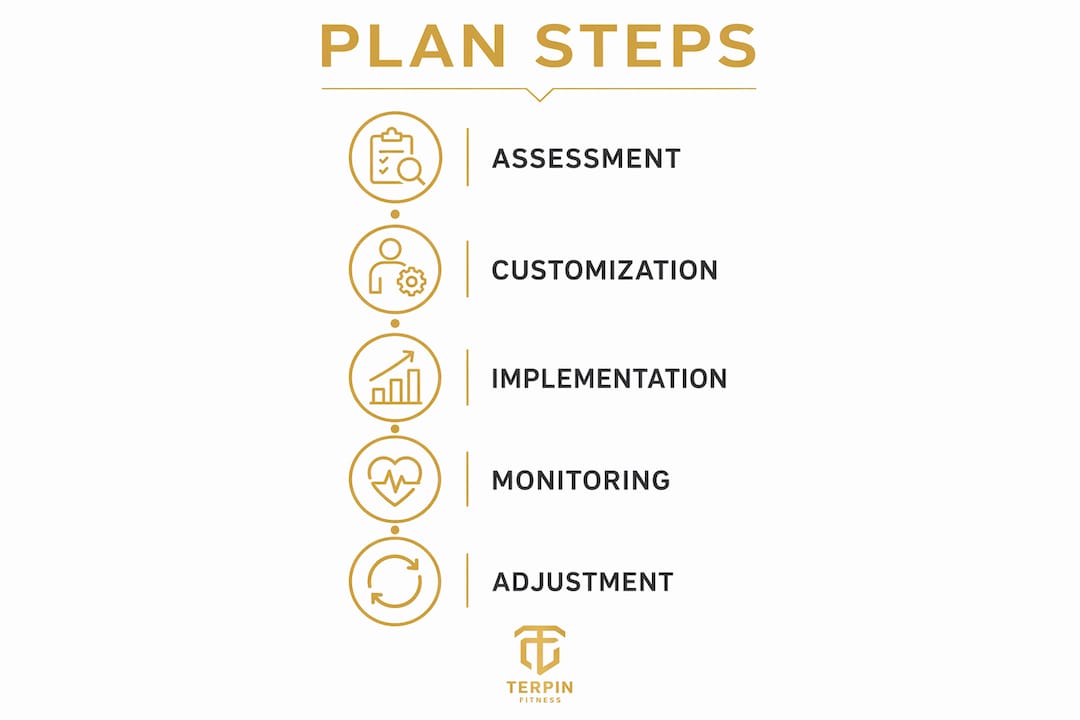
A personal nutrition strategy only works if you can actually live with it. Rigid meal plans that require you to cook every meal from scratch, avoid every social event, or eat foods you dislike will fail regardless of how scientifically sound they are.
Plans that adapt to lifestyle and emotional triggers consistently outperform rigid diets in long-term sustainability. Flexibility is not a compromise. It is a feature.
Practical ways to customize your plan:
Food preferences: Build your meal structure around foods you genuinely enjoy. If you hate salads, do not eat salads. Find other vegetables that work for you.
Meal timing: Some people do well with three structured meals. Others perform better with two larger meals and a small snack. Neither is universally superior. Pick the pattern that fits your hunger and schedule.
Budget: A tailored diet program does not require expensive superfoods. Eggs, canned fish, frozen vegetables, and oats are among the most cost-effective high-protein, high-fiber foods available.
Schedule: If you travel for work or have irregular hours, your plan needs built-in strategies for airports, restaurants, and late-night meals. A plan that only works under perfect conditions is not a plan.
Activity preferences: Walking, swimming, lifting weights, and cycling all produce fat loss when paired with a calorie deficit. Choose movement you will actually do consistently.
Tracking your food intake, even loosely, helps you spot patterns and make adjustments. Apps like MyFitnessPal or Cronometer give you visibility into your eating without requiring obsessive precision.
Common challenges and how to push through them
Every person following a weight loss plan hits obstacles. Plateaus, emotional eating, and schedule disruptions are normal parts of the process, not signs of failure.
Weight loss plateaus are the most common frustration. Your body adapts to a calorie deficit over time by reducing its energy output. When the scale stops moving for two or more weeks, the solution is not to eat less. The solution is to reassess your body composition data and adjust macros or activity levels based on what the numbers actually show.
Emotional eating is the second most common barrier. Stress, boredom, and social pressure trigger food choices that have nothing to do with hunger. Behavioral support tools, including journaling, stress management techniques, and working with a weight loss coach, address the root cause rather than just the symptom.
“Without behavioral tools, many plans fail within six months. Addressing emotional and social factors is not optional. It is the difference between a plan that works once and one that works for life.” — Thomas Bariatrics
Realistic expectations also matter. A safe and sustainable goal is losing 5% to 10% of your starting weight within six months. For a 200-pound person, that is 10 to 20 pounds. That pace preserves muscle, avoids metabolic slowdown, and produces results that last.
Complex cases, including metabolic disorders, autoimmune conditions, and hormonal imbalances, require professional medical oversight beyond what a calorie deficit alone can address. If you have a diagnosed condition, work with a physician or registered dietitian alongside your trainer.
Key takeaways
A personalized weight loss plan works because it matches your biology, behavior, and lifestyle rather than applying a generic formula that ignores all three.
Point | Details |
Personalization beats generic diets | Plans built around your metabolism, genetics, and lifestyle produce better and more lasting results. |
Moderate calorie deficits are safest | A deficit of 300–500 calories per day produces steady fat loss without triggering metabolic slowdown. |
Behavior strategies are non-negotiable | Addressing emotional eating and social triggers is what separates plans that last from plans that fail. |
Progress monitoring drives adjustments | Track body composition every four weeks and modify macros or activity when progress stalls. |
Professional support improves outcomes | Weight loss coaching and medical oversight are especially valuable for complex or plateau-prone cases. |
Why I think most people approach weight loss backwards
Marc here. After years of working with clients in Pensacola and online, the pattern I see most often is this: people start with the diet and bolt on the lifestyle adjustments later. That is exactly backwards.
The most successful clients I have worked with started by mapping their actual life. Their work schedule, their stress points, their relationship with food, and their history of what has and has not worked before. The nutrition and exercise plan came second. It was built to fit the life, not the other way around.
Generic programs sell the fantasy that discipline alone produces results. It does not. Discipline is a limited resource. A well-designed individualized plan reduces the amount of discipline required by removing friction. When your plan fits your schedule, your food preferences, and your budget, you do not need heroic willpower to follow it.
The other thing I would push back on is the obsession with speed. Losing 10 to 20 pounds in six months sounds slow compared to what crash diets promise. But those 10 to 20 pounds stay off. The clients who lose weight fast almost always regain it. The clients who lose it at a moderate, sustainable pace almost always keep it off. That is not a coincidence. It is biology.
If you are serious about lasting results, invest in understanding your body before you invest in a diet plan. Get the blood work. Get the body composition baseline. Then build from there with someone who knows what they are doing.
— Marc
Personalized training and coaching at Terpinfit
Terpinfit offers both in-person and online personal training built around your specific goals, schedule, and health profile. Every program starts with a detailed assessment so your plan reflects your actual starting point, not a generic template.

Whether you are in Pensacola or anywhere in the United States, Terpinfit’s personal training programs combine nutrition guidance, structured workouts, and behavioral coaching into one cohesive plan. You get a trainer who adjusts your program as you progress, not a static PDF you are left to figure out alone. If you are ready to work with a coach who builds your plan around your life, reach out here to get started.
FAQ
What is a personalized weight loss plan?
A personalized weight loss plan is a customized program built around your individual metabolism, health history, food preferences, and lifestyle. It combines calorie targets, macronutrient goals, exercise programming, and behavior strategies tailored specifically to you.
How much weight can I lose on a personalized plan?
People following individualized weight management plans typically lose 6–10 pounds in the first two weeks and around 13% of total body weight within six months. A safe and sustainable pace is 5% to 10% of starting weight over six months.
Why do generic diets fail where personalized plans succeed?
Generic diets ignore genetics, hormones, and individual metabolism, which are the primary factors that determine how your body responds to a calorie deficit. Personalized plans account for these biological differences and adapt over time as your body changes.
How do I create a personalized weight loss plan?
Start with a body composition baseline and a full metabolic blood panel, then calculate your daily energy expenditure using a validated tool like the NIH Body Weight Planner. Set a moderate calorie deficit of 300–500 calories, establish macronutrient targets, and build in behavioral support strategies from the start.
When should I work with a professional for weight loss?
Working with a weight loss coach or registered dietitian is especially valuable if you have a metabolic condition, have experienced repeated plateaus, or have a history of emotional eating. Complex cases require professional oversight that goes beyond calorie counting alone.
Recommended
Comments