RPE Scale Exercise: What It Is and How to Use It

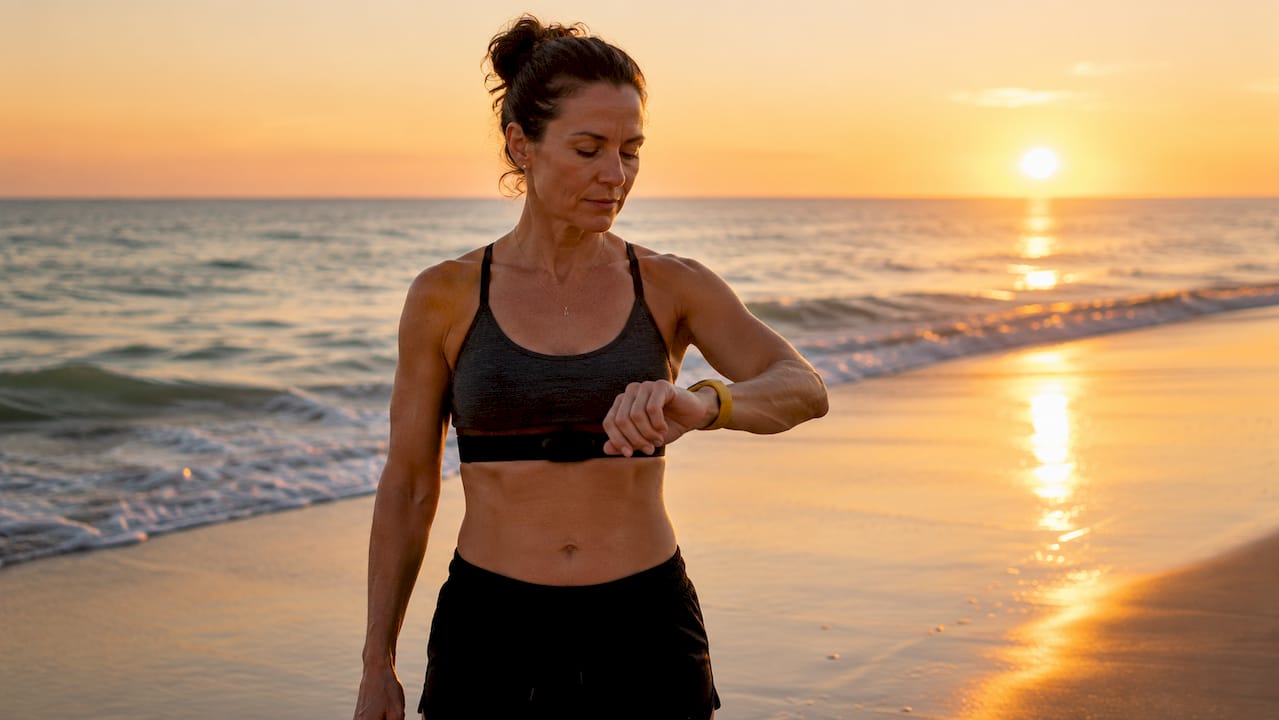
The RPE scale, formally known as the Rate of Perceived Exertion scale, is a numeric tool that measures how hard your body feels it is working during exercise. You rate your effort on a number scale, no heart rate monitor required. Fitness enthusiasts, clinical professionals, and coaches all use it to set and track exercise intensity. The American College of Sports Medicine (ACSM) and the CDC both reference RPE as a reliable method for gauging workout effort. Understanding what is rpe scale exercise means gives you a self-regulating tool that works whether you train in a gym, outdoors, or at home.
What is the RPE scale in exercise?
The RPE scale is a subjective measure of physical effort, ranging from no exertion at all to maximum effort. Two versions exist, and knowing the difference matters for how you apply it.
The original Borg scale (6–20)
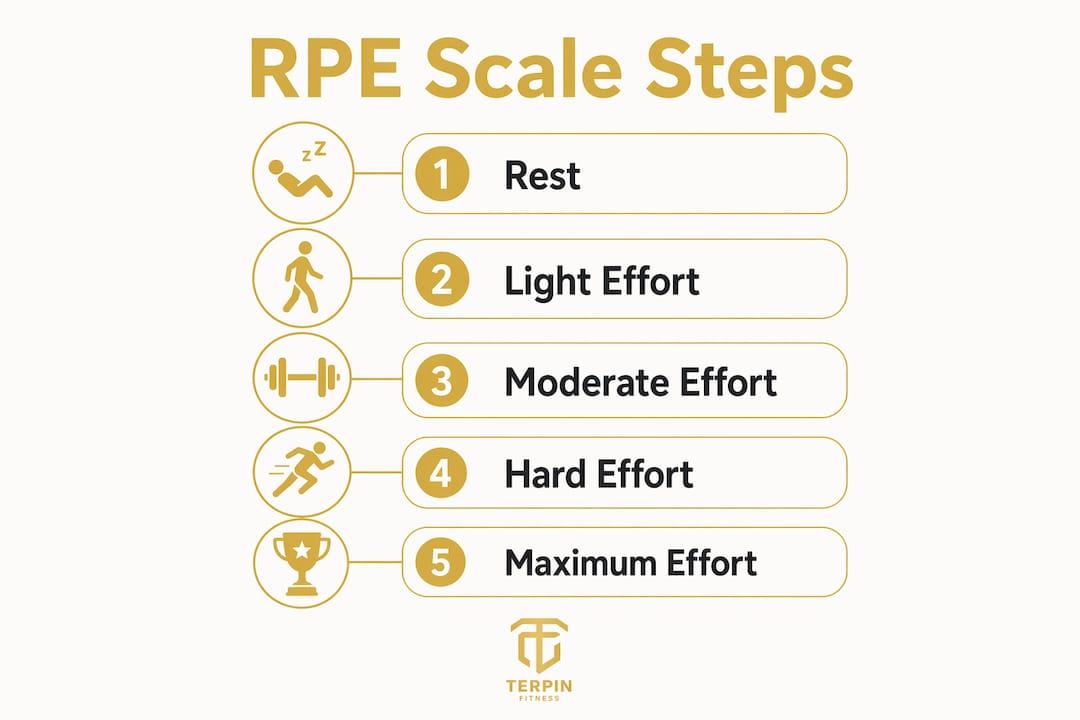
Swedish physiologist Gunnar Borg created the original scale in the 1960s. The original Borg scale runs from 6 to 20, and the numbers were deliberately chosen to estimate heart rate. Multiply any Borg number by 10 and you get an approximate beats-per-minute reading. A rating of 12, for example, suggests a heart rate near 120 BPM. This design made it useful in clinical and research settings, but recreational athletes found the 6–20 range unintuitive. Most people do not naturally think of rest as a “6.”
The modified 0–10 scale
The modified 0–10 scale replaced the original for everyday fitness use. Zero means complete rest, and 10 means the hardest effort you can imagine. The simpler range makes self-assessment faster and more accurate for non-clinical users. Most personal trainers and fitness programs now default to this version.
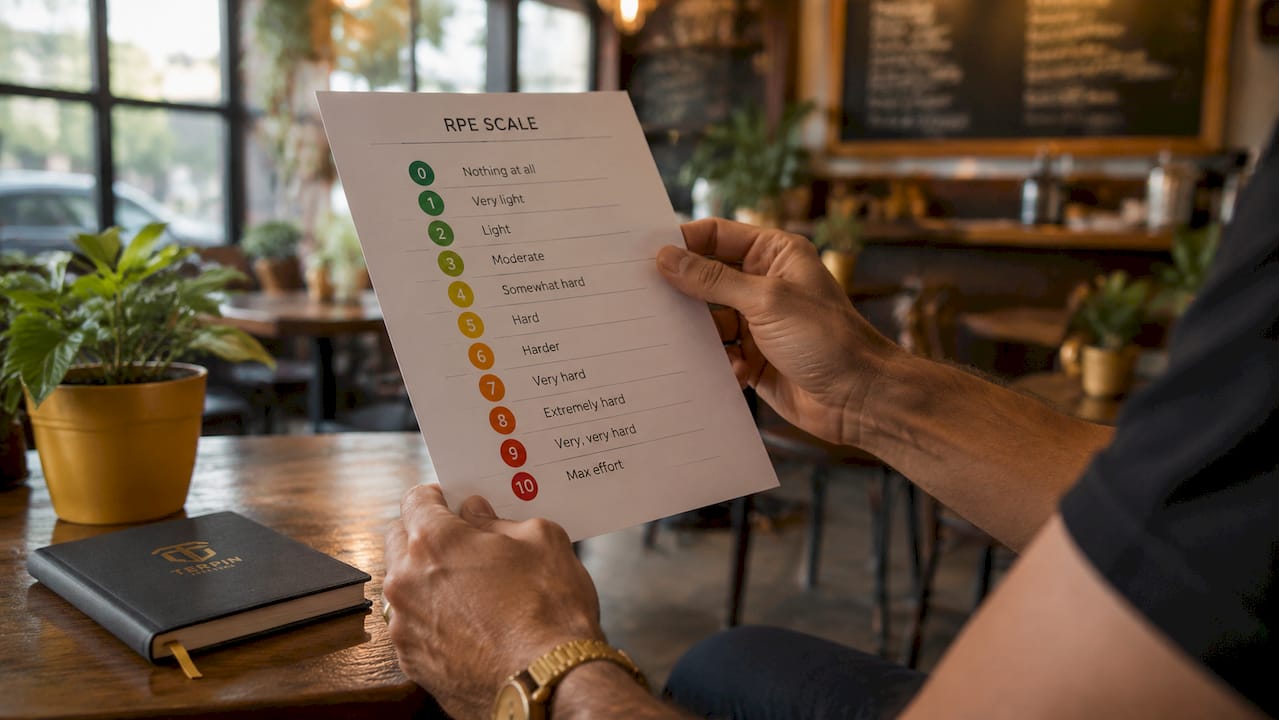
Level | 0–10 Scale | Subjective Description |
Rest | 0 | No effort at all |
Very light | 1–2 | Easy breathing, could hold a full conversation |
Moderate | 3–4 | Noticeable effort, can still speak in sentences |
Somewhat hard | 5–6 | Breathing harder, short sentences only |
Vigorous | 7–8 | Heavy breathing, speaking is difficult |
Maximum | 9–10 | All-out effort, cannot sustain for long |
Physiological cues that inform your rating
Your RPE rating should reflect your whole body, not just one signal. The best RPE assessments account for breathing rate, muscle fatigue, sweating, and overall effort together. Relying only on leg burn during a cycling session, for instance, will underestimate your true intensity. Breathing rate is often the most reliable single cue because it rises predictably with cardiovascular demand.
Pro Tip: If you can sing comfortably, your RPE is probably below 3. If you can speak only a few words at a time, you are likely in the 6–7 range. This “talk test” is a fast, practical cross-check.
How to use the RPE scale to hit your fitness goals
RPE becomes most useful when you connect it to specific intensity targets. The CDC defines moderate-intensity exercise as an RPE of 3–6 on the 0–10 scale, where you can hold a conversation but feel clear effort. Vigorous intensity starts at RPE 7, where heavy breathing limits your ability to speak in full sentences. That distinction matters because moderate and vigorous exercise produce different health outcomes and require different recovery time.
Weekly volume recommendations
The ACSM recommends that healthy adults target 150–300 minutes of moderate-intensity aerobic activity per week, or 75–150 minutes of vigorous-intensity activity. Those numbers assume you are working at the correct RPE for each category. Logging your RPE alongside your workout duration tells you whether your “moderate” sessions are actually moderate, or whether you are consistently underworking or overworking.
Applying RPE to your workouts: a step-by-step approach
Set an RPE target before you start. Decide whether today’s session is moderate (RPE 3–5) or vigorous (RPE 7–8) based on your weekly plan and recovery status.
Check in every 5–10 minutes. Pause briefly and rate your effort. Adjust pace, resistance, or incline to stay on target.
Use the talk test as a quick confirmation. Match your speech ability to the table above to verify your number is accurate.
Log your RPE after each session. Record it alongside duration, workout type, and how you felt overall. Patterns emerge quickly.
Adjust the following week based on trends. If your RPE at a given pace drops over several sessions, your fitness is improving. Increase intensity to keep progressing.
Pro Tip: Your RPE on a Monday after a poor night’s sleep will feel higher than the same workout on a well-rested Thursday. That is normal. The same workload can feel harder on different days due to stress, sleep, and mental fatigue. Do not force yourself to hit a number. Adjust the effort to match the target RPE instead.
What are the benefits and limitations of the RPE scale?
RPE gives you a personalized, real-time measure of how your heart, lungs, and muscles are managing exercise together. Heart rate monitors show one data point. RPE reflects the full picture of how your body feels in that moment. That makes it especially useful on days when heart rate data is skewed by caffeine, dehydration, or heat.
Where RPE outperforms rigid heart rate zones
Heart rate zones require accurate max heart rate data, which most people estimate rather than measure. RPE requires nothing except honest self-awareness. For fitness enthusiasts who train across different environments, RPE adapts automatically. A run in Pensacola’s summer heat will push your heart rate higher than the same pace in cool weather, but your RPE captures that added strain without any recalibration.
Factors that can throw off your rating
External factors like stress and sleep deprivation can make the same physical workload feel subjectively harder or easier. Mental fatigue from a demanding workday can inflate your RPE even when your body is physically capable of more. Recognizing this prevents two common mistakes: pushing through a genuinely hard session because you think you “should” feel fine, or cutting a session short because stress made it feel harder than it was.
Safety limits you must respect
RPE is a self-regulation tool, and that means you carry responsibility for honest assessment. If you experience chest pressure, extreme dizziness, or gasping for breath, stop exercising immediately. Those symptoms indicate you are beyond safe intensity, regardless of what your RPE number says. No target number justifies ignoring warning signs.
Common pitfalls and best practices:
Pitfall: Rating effort based only on muscle soreness. Fix: Include breathing, heart rate feel, and overall fatigue in your assessment.
Pitfall: Ignoring daily variation. Fix: Treat your RPE target as a range, not a fixed number.
Pitfall: Overestimating effort to justify a shorter session. Fix: Log RPE immediately after each interval, not at the end when memory distorts perception.
Pitfall: Dismissing RPE as “too subjective.” Fix: Consistency builds accuracy. The more you practice, the more reliable your ratings become.
How can you use RPE to improve performance and prevent injury?
A declining RPE at the same workload is one of the clearest signs of improved fitness. If a 30-minute run at 6 mph felt like an RPE of 6 three weeks ago and now feels like an RPE of 4, your cardiovascular system has adapted. That is your signal to increase duration, speed, or resistance to keep the training stimulus effective.
Tracking progress with RPE logs
Pairing RPE with a workout log gives you a simple progress tracker that costs nothing. Write down the exercise, duration, intensity, and your RPE rating after every session. Over four to six weeks, you will see clear trends. Fitness gains show up as lower RPE scores at the same effort level. Overtraining shows up as consistently higher RPE scores despite no change in workload.
Working with a trainer to apply RPE
A personal trainer can calibrate your RPE accuracy faster than self-study alone. Trainers watch your breathing, posture, and movement quality in real time and can tell you when your rating does not match what they observe. Sharing your RPE ratings during sessions also helps your trainer adjust your plan week to week. Learning how to communicate your effort to a trainer is a skill that pays off in faster, safer progress.
Injury prevention through honest effort tracking
RPE prevents two injury patterns. The first is chronic overtraining, where you consistently push into RPE 8–9 without adequate recovery. The second is chronic undertraining, where you stay comfortable and never create enough stimulus to improve. Both patterns are visible in an RPE log. A well-structured plan based on personal training frequency guidelines uses RPE targets to balance hard sessions with recovery sessions across the week.
Pro Tip: If your RPE at a familiar workout suddenly spikes two or more points with no change in workload, treat it as a warning. That spike often precedes illness, overtraining, or injury by 24–48 hours.
Key Takeaways
The RPE scale is the most practical exercise intensity tool available because it adapts to your body, your environment, and your daily condition without requiring any equipment.
Point | Details |
Two scales exist | The original 6–20 Borg scale estimates heart rate; the 0–10 modified scale is preferred for everyday fitness use. |
Intensity targets are clear | Moderate exercise sits at RPE 3–6; vigorous exercise starts at RPE 7 on the 0–10 scale. |
Daily variation is normal | Stress, sleep, and mental fatigue shift RPE day to day; adjust effort to match the target, not the other way around. |
Declining RPE signals progress | If the same workout feels easier over weeks, your fitness has improved and intensity should increase. |
Safety overrides any number | Chest pressure, extreme dizziness, or gasping for breath require you to stop immediately, regardless of your RPE target. |
What I’ve learned from watching clients use the RPE scale
Most people underestimate their effort at low intensities and overestimate it at high ones. That sounds contradictory, but it makes sense once you see it in practice. During easy walks or light cycling, people tend to rate themselves a 2 when they are actually at a 4 because they feel fine and assume “fine” means easy. During hard intervals, they call everything a 10 because it hurts, even when they could clearly sustain the effort for another minute.
The fix is repetition and feedback. After a few weeks of checking in with clients mid-workout and comparing their RPE to observable cues like breathing and speech, their ratings sharpen considerably. The scale stops being a guess and starts being a real data point.
The other mistake I see constantly is treating RPE as a fixed daily target rather than a flexible guide. Someone plans a vigorous session at RPE 7–8, shows up exhausted from a bad week, and forces themselves through it anyway. That is how minor fatigue turns into a two-week setback. RPE is supposed to protect you from that. If your body says 7 feels like 9 today, believe it.
RPE does not replace fitness technology. Heart rate monitors, GPS watches, and power meters all add value. But RPE is the one tool that integrates everything your body is experiencing into a single, honest number. No device does that as well as you can, once you learn to listen.
— Marc
Terpinfit personal training and the RPE scale
At Terpinfit, every training plan built for clients in Pensacola and online includes RPE education from day one. Understanding your effort level is not a bonus skill. It is the foundation of safe, effective training.
Terpinfit’s coaches use RPE targets to structure each session, track weekly progress, and adjust plans when life gets in the way. Whether you train in person or remotely, you will always know exactly how hard you should be working and why. If you are ready to train with purpose and stop guessing at intensity, explore personal training services with Terpinfit or submit an inquiry through the services page to get started.
FAQ
What does RPE stand for in exercise?
RPE stands for Rate of Perceived Exertion. It is a numeric scale used to measure how hard your body feels it is working during physical activity.
What is a good RPE for moderate exercise?
Moderate-intensity exercise targets an RPE of 3–6 on the 0–10 scale, where you feel clear effort but can still hold a conversation, per CDC guidelines.
How does the Borg scale differ from the 0–10 RPE scale?
The original Borg scale runs from 6–20 and was designed to estimate heart rate, while the modified 0–10 scale is simpler and preferred for recreational fitness use.
Can RPE replace a heart rate monitor?
RPE captures whole-body effort that a heart rate monitor cannot, including fatigue, breathing, and mental strain. Many fitness enthusiasts use both together for the most complete picture.
When should I stop exercising based on RPE?
Stop immediately if you experience chest pressure, extreme dizziness, or gasping for breath. Those symptoms signal unsafe intensity regardless of your RPE target, per University of Michigan guidelines.
Recommended
Comments