Accountability Coaching for Weight Loss: A Real Guide


Accountability coaching for weight loss is a structured support method where a trained coach provides regular check-ins, goal tracking, and behavioral feedback to help you lose weight consistently. Unlike generic diet advice, this approach closes the gap between knowing what to do and actually doing it. Research shows that coaching increases weight loss by approximately 40–50% over standard dietary counseling alone. That gap is not a willpower problem. It is a structure problem, and accountability coaching solves it directly.
What is accountability coaching for weight loss?
Accountability coaching is the recognized industry term for a goal-oriented relationship in which a coach monitors your progress, provides feedback, and holds you to commitments you set yourself. In weight loss, this means more than motivation. It means a systematic process that makes follow-through easier than reverting to old habits.
Most people already know the basics of diet and exercise. The problem is life friction: stress, schedule changes, and low-motivation days that erode good intentions. Accountability coaching closes this behavioral gap by creating structured check-ins and escalation protocols. When you know a coach will review your food log on Thursday, you are far more likely to keep it updated on Wednesday night.
The coaching relationship also builds relational trust over time. That trust becomes a commitment device. You are not just accountable to a goal on paper. You are accountable to a real person who knows your history, your obstacles, and your progress.
How does accountability coaching work to support weight loss?
The coaching process follows a clear sequence that repeats throughout the program. Each step builds on the last.
Initial goal-setting session. The coach and client establish SMART goals, meaning goals that are specific, measurable, achievable, relevant, and time-bound. This session also identifies personal barriers and preferred communication styles.
Regular check-ins. Most programs include up to 12 recurring check-ins by phone or video after the initial session. These calls review progress, adjust goals, and address obstacles before they become reasons to quit.
Behavioral tracking. Coaches use food logs, activity data, and self-reported mood to identify patterns. Self-weighing, for example, becomes a neutral feedback tool rather than a source of anxiety when a coach frames it correctly.
Feedback and adjustment. The coach provides specific, non-judgmental feedback after each check-in. This is where motivational interviewing techniques matter most. Coaches trained in motivational interviewing complete 20 or more hours of practice before working with clients.
Relapse response. When weight regain or missed workouts occur, the coach activates a pre-agreed response plan rather than letting a bad week become a bad month.
The psychological engine behind all of this is social facilitation. People perform better when observed by someone they respect. Combine that with a commitment device and a trained coach, and you have a system that works even when intrinsic motivation drops.
Pro Tip: Before your first coaching session, write down the three situations that have derailed your past weight loss attempts. Bring that list to the session. A good coach will build your check-in structure around those exact friction points.
What are the benefits of accountability coaching for weight loss?
The benefits of coaching for weight loss go well beyond the number on the scale. Clinical outcomes, psychological improvements, and behavioral changes all compound over time.
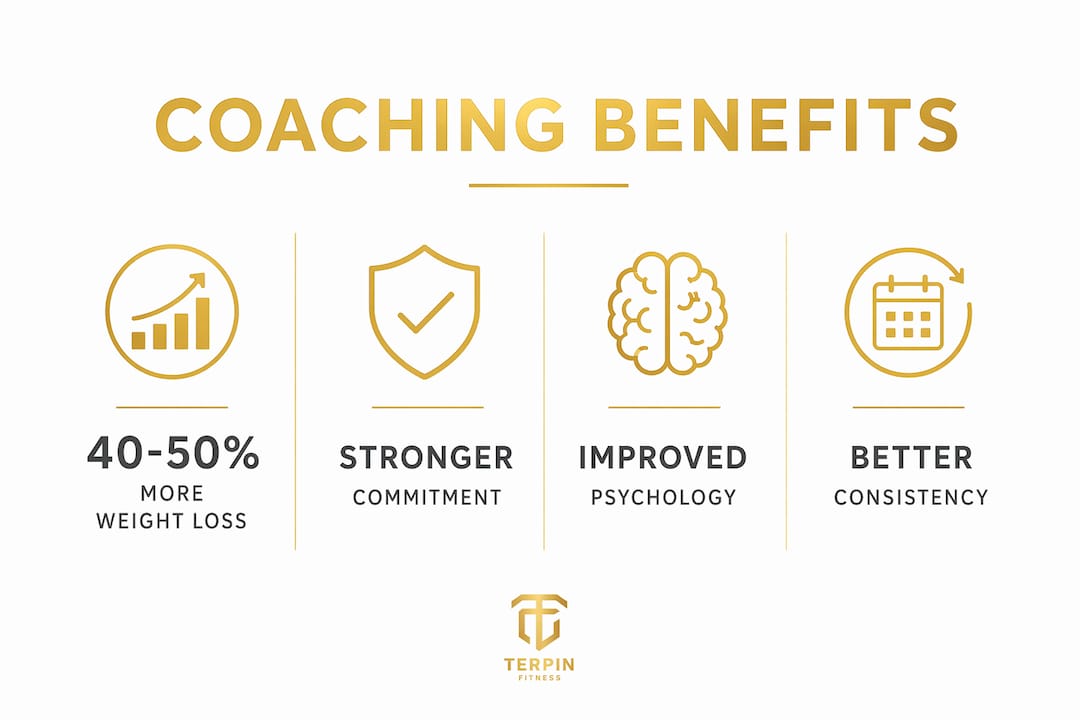
Clients receiving brief coaching calls after weight regain lost about 1.05% body weight over 40 days, compared to a 0.37% gain in the control group. That difference shows up in a short window of just 40 days. The long-term gap is even wider.
Key benefits include:
Reduced anxiety and improved self-efficacy. Health coaching improves psychosocial outcomes including anxiety reduction and stronger belief in your own ability to change. Higher self-efficacy directly predicts better adherence to diet and exercise plans.
Higher adherence rates. Coaching keeps you on track even when motivation fluctuates. Behavioral outcomes improve because external accountability fills the gap that internal motivation leaves open.
Relapse prevention. Coaching reduces the behavioral gaps that lead to weight regain. A coach catches early warning signs, like skipped workouts or stress eating, before they become full relapses.
Better dietary and physical activity habits. Clients with coaches show stronger adherence to both nutrition plans and exercise routines compared to those working alone or with basic counseling.
Sustained results over time. Multidimensional coaching models that combine nutrition guidance with telemonitoring produce consistent positive outcomes over 12–24 months. That is the timeframe where most solo efforts fail.
The psychological shift is worth naming directly. Coaching changes how you see yourself. You move from “someone who keeps failing” to “someone with a system and a partner.” That identity shift is what makes results stick.
What coaching structures and formats exist for weight loss?
Accountability coaching programs vary in length, format, and delivery method. Understanding the options helps you choose what fits your life.
Most structured programs begin with one in-depth goal-setting session, followed by a series of shorter check-in calls. The 5As framework, used widely in peer coaching, organizes each interaction around five steps: Assess, Advise, Agree, Assist, and Arrange. This framework keeps sessions focused and ensures every call produces a concrete next action.
Format | Description | Best for |
Virtual coaching | Video or phone check-ins on a set schedule | Clients with busy schedules or limited local access |
In-person coaching | Face-to-face sessions with a trainer or coach | Clients who benefit from direct observation and hands-on feedback |
Hybrid coaching | Mix of in-person and virtual sessions | Clients who want flexibility without losing personal connection |
Peer coaching | Trained peer coaches using structured frameworks | Clients who respond well to shared experience and community |
Digital tools add a layer of continuous accountability between sessions. Telemonitoring devices, food tracking apps, and wearable fitness trackers give coaches real data to work with. The most effective programs integrate these tools with personalized coaching rather than relying on technology alone.
Pro Tip: If you are choosing between virtual and in-person coaching, pick the format you will actually show up for consistently. The best coaching program is the one you complete. Consistency beats format every time.
Building an accountability fitness routine around your chosen format makes the structure feel natural rather than forced. The goal is to make accountability a habit, not a chore.
How can you find and work with an accountability coach effectively?
Choosing the right coach matters as much as choosing to use coaching at all. A poor fit wastes time and erodes trust. A strong fit accelerates results.
Look for structured programs, not just motivation. A qualified coach offers a defined process: an intake session, a check-in schedule, and a clear method for tracking progress. Vague promises of “support and encouragement” are not enough.
Verify training and experience. Coaches who use motivational interviewing and the 5As framework bring proven behavioral tools to each session. Ask directly about their training background and how they handle setbacks with clients.
Set realistic goals from the start. Work with your coach to define what success looks like at 30 days, 90 days, and 6 months. A personalized weight loss plan built collaboratively is far more effective than a generic template handed to you on day one.
Prepare for each session. Review your food log, note your wins and struggles, and write down one question before every check-in. Coaches work best when clients come prepared. The session becomes a problem-solving conversation, not a status report.
Integrate coaching with your existing support system. Tell a family member or close friend about your coaching program. Social support at home reinforces what your coach builds during sessions. The benefits of online fitness coaching expand further when your environment supports your goals.
Track your own data between sessions. Use a simple food log, a wearable tracker, or a notebook. Objective data removes guesswork from your check-ins and gives your coach something concrete to work with.
The single biggest mistake people make is treating coaching as passive. You are not a passenger. The coach provides structure and feedback. You provide honesty and effort. That combination is what produces results.
Key Takeaways
Accountability coaching works because it replaces willpower with structure, turning vague weight loss intentions into consistent, coach-supported daily actions that produce measurably better outcomes than solo efforts.
Point | Details |
Coaching outperforms solo efforts | Accountability coaching increases weight loss results by approximately 40–50% over standard dietary counseling alone. |
Structure closes the behavioral gap | Regular check-ins and pre-agreed response plans make follow-through easier than reverting to old habits. |
Psychosocial benefits compound results | Coaching reduces anxiety and builds self-efficacy, which directly improves long-term adherence to diet and exercise. |
Format matters less than consistency | Virtual, in-person, and hybrid formats all work when the client shows up and engages honestly every session. |
Technology amplifies coaching | Telemonitoring and tracking tools produce the most consistent outcomes when paired with personalized coaching over 12–24 months. |
What I have learned coaching real people through weight loss
The most common thing I hear from new clients is some version of “I know what I should be doing.” They are usually right. They know vegetables beat chips. They know walking beats sitting. The problem is never information. The problem is the Tuesday afternoon when everything goes sideways and there is no structure to catch them.
What I have seen work, consistently, is not the perfect plan. It is the relationship. When a client knows I am going to ask about their Wednesday workout on Thursday morning, Wednesday becomes a different day. That external anchor changes behavior in ways that no app or meal plan can replicate on its own.
The other thing I have learned is that perfection is the enemy of progress in this work. Clients who miss a week and then disappear are not lazy. They are embarrassed. A good coach makes it safe to come back after a bad week. That psychological safety is what separates a coaching relationship from a judgment session. When clients know they can be honest about a rough patch without shame, they stay in the process long enough to get real results.
Weight loss is not a sprint. The people who succeed are the ones who stay in the game through the hard weeks. Coaching is what keeps them in the game.
— Marc
Terpinfit accountability coaching in Pensacola
Terpinfit offers both online and in-person personal training in Pensacola, Florida, built around the same structured accountability model described throughout this article. Every program starts with a goal-setting session, followed by regular check-ins designed around your specific obstacles and schedule.

Whether you prefer face-to-face sessions or the flexibility of virtual coaching, Terpinfit builds a program around your life, not a generic template. The focus is on consistent progress, honest feedback, and a structure that keeps you moving forward even on hard weeks. If you are ready to work with a personal trainer in Pensacola who takes accountability seriously, Terpinfit is the place to start. You can also review available services and coaching formats to find the right fit for your goals.
FAQ
What is accountability coaching for weight loss?
Accountability coaching for weight loss is a structured coaching method where a trained coach provides regular check-ins, goal tracking, and behavioral feedback to help you lose weight consistently. It closes the gap between intention and action by creating external accountability structures that support follow-through.
How much more weight do people lose with a coach?
Research shows that accountability coaching increases weight loss by approximately 40–50% compared to standard dietary counseling alone. Even brief coaching calls after weight regain produce measurably better outcomes than no coaching support.
How often do accountability coaching sessions happen?
Most structured programs include an initial goal-setting session followed by up to 12 recurring check-ins by phone or video. Session frequency typically ranges from weekly to biweekly depending on the program design and client needs.
Does virtual accountability coaching work as well as in-person?
Virtual coaching produces strong results when clients engage consistently and use digital tracking tools between sessions. Multidimensional programs that combine virtual coaching with telemonitoring show consistent positive outcomes over 12–24 months.
What should I look for in a weight loss accountability coach?
Look for a coach who uses a defined process with structured check-ins, SMART goal-setting, and a clear method for handling setbacks. Training in motivational interviewing and experience with behavioral frameworks like the 5As are strong indicators of a qualified coach.
Recommended
Comments