What Does a Personal Trainer Do? Your Complete Guide
- terpinfitness
- Jun 18
- 7 min read

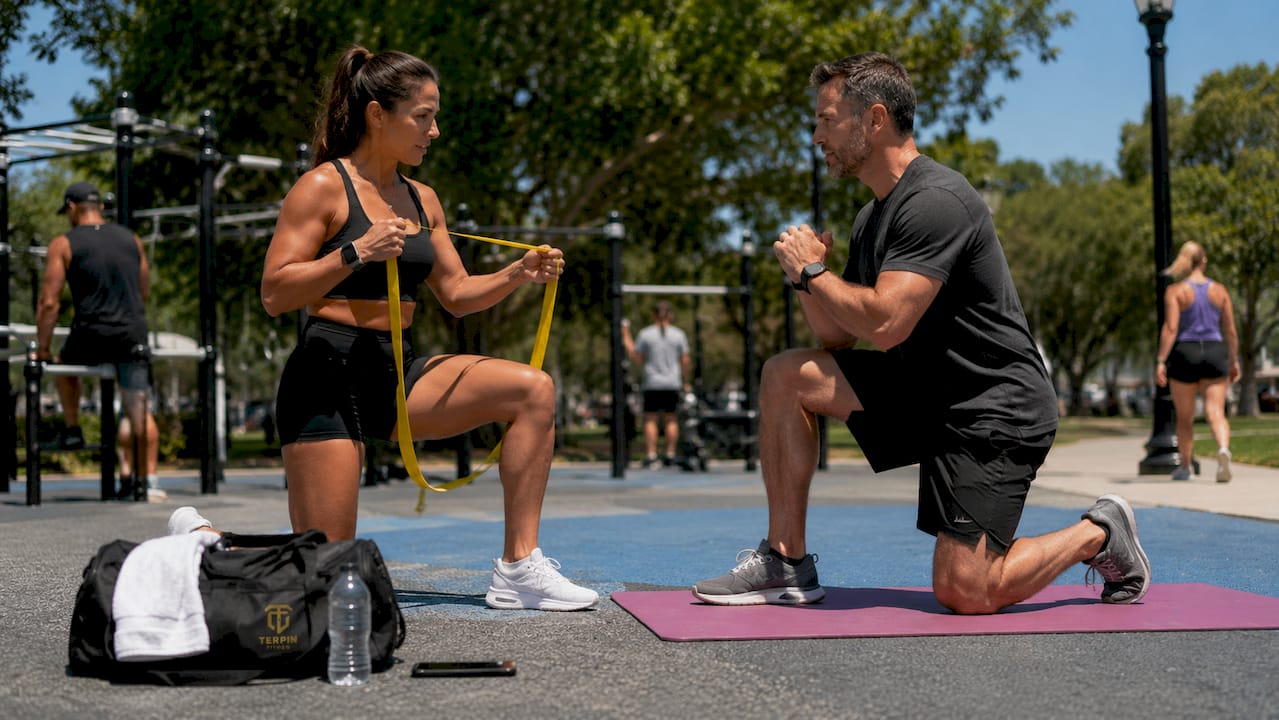
A personal trainer is a certified fitness professional (our coaches are NASM and ISSA NCCPT-CPT Accredited Certified Trainers) who designs individualized workout programs, teaches proper exercise technique, and holds clients accountable to their goals. The role goes far beyond counting reps. A trainer acts as a coach, educator, and motivator, guiding you through every stage of your fitness journey from the first assessment to long-term progress. Whether your goal is weight loss, muscle gain, or simply moving better, understanding what personal training actually involves helps you decide if hiring one is the right move.
What does a personal trainer do in a typical session?
A personal trainer designs and delivers structured, goal-driven sessions built around your specific needs, not a generic template pulled from a fitness magazine. Each session combines exercise instruction, technique correction, and real-time feedback. The trainer watches how you move, adjusts your form on the spot, and pushes you past the point where most people quit on their own. That combination of programming and presence is what separates personal training from working out alone.

The industry term for this service is personal training, and it covers a broad scope. According to Wikipedia’s overview of personal trainers, trainers assess posture, movement, flexibility, balance, core function, cardio-respiratory fitness, and body composition. That data becomes the foundation for everything that follows. Without it, a trainer is guessing.
What assessments do personal trainers conduct first?
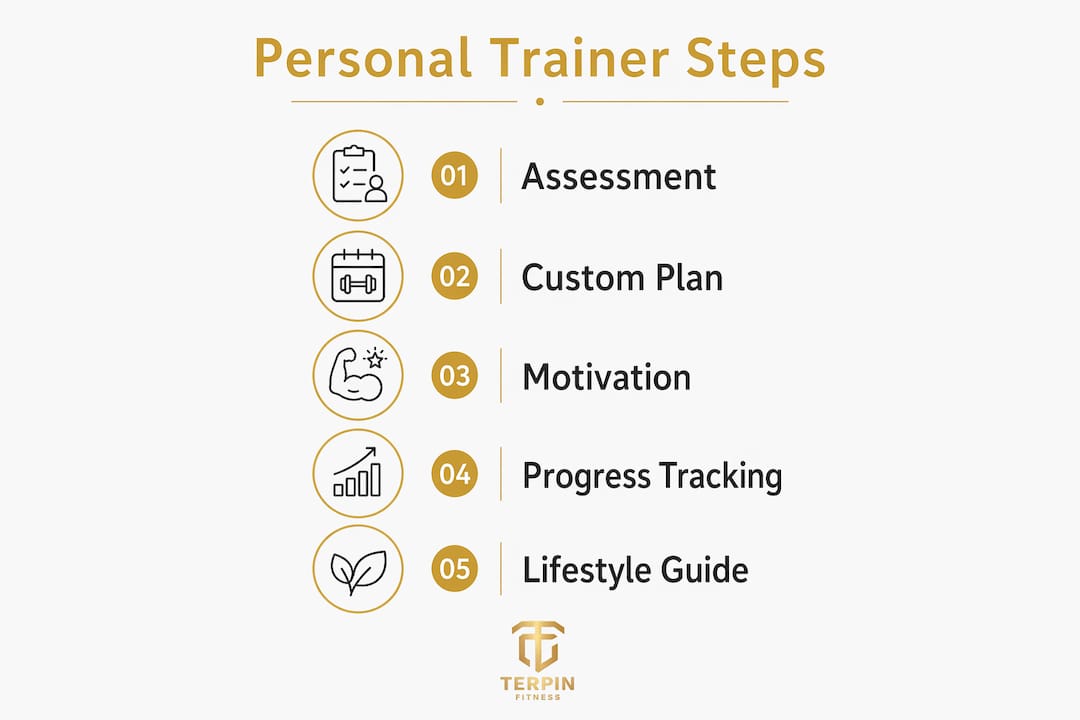
The first thing a qualified trainer (our coaches are NASM and ISSA NCCPT-CPT Accredited Certified Trainers) does is gather baseline data through a structured health and fitness assessment. This is not a formality. It is the step that separates a program built for you from one built for everyone.
A thorough initial evaluation typically covers:
Posture and movement screening to spot imbalances or compensations that could cause injury
Flexibility and mobility testing to identify range-of-motion limitations
Strength and muscular endurance baselines to set realistic starting loads
Cardio-respiratory fitness measured through a simple step test or timed walk
Body composition using measurements or skinfold testing
These initial fitness assessments are repeated throughout your training to measure progress objectively. That matters because progress often feels invisible in the early weeks. Seeing numbers move on paper keeps motivation high when the mirror hasn’t caught up yet.
Pro Tip: Ask your trainer to share your baseline assessment results in writing. Reviewing them at the 8-week mark gives you concrete proof of progress and helps your trainer adjust the program with real data.
How do trainers build and adjust your workout program?
Program design is the most technical part of what a trainer does, and it is where the real value shows up. A well-built program balances strength, aerobic, and mobility training based on your fitness level, injury history, and specific goals. A 55-year-old recovering from a knee replacement needs a completely different program than a 28-year-old training for their first 5K. A good trainer builds both from scratch.
The program design process follows a clear sequence:
Review assessment data to identify strengths, weaknesses, and movement restrictions
Set short and long-term goals with measurable milestones, such as losing 10 pounds in 12 weeks or deadlifting bodyweight
Select exercises that match your current ability and move you toward your goal without risking injury
Assign sets, reps, and rest periods based on the training goal, whether that is fat loss, hypertrophy, or endurance
Schedule progression so the program gets harder as you get stronger, preventing plateaus
Programs are never static. A trainer modifies your plan when you hit a plateau, recover from an injury, or simply get bored. That ongoing adjustment is what keeps results coming over months, not just weeks.
Pro Tip: If your trainer hasn’t updated your program in more than four weeks, ask why. Stale programming is one of the most common reasons clients stop seeing results.
How do personal trainers keep you motivated and accountable?
Motivation is where most self-directed gym-goers fall apart. A trainer solves this problem structurally. Scheduled appointments and consistent feedback prevent the inactivity that derails long-term behavior change. When you know someone is waiting for you at 7 a.m., you show up. That simple fact changes everything.
The accountability a trainer provides works on several levels:
Scheduled sessions create a commitment that is harder to skip than a solo gym visit
Regular check-ins between sessions keep nutrition, sleep, and recovery on track
Positive reinforcement after a hard set or a tough week builds the confidence to keep going
Honest feedback when effort drops prevents the slow slide into coasting
Personal training is a comprehensive accompaniment, not just physical instruction. The mental support a trainer provides helps clients push past the moments when quitting feels reasonable. That is not a soft benefit. It is the reason most people who hire a trainer actually finish what they started.
The best trainers also build trust and identify individual motivators rather than applying the same pep talk to every client. Some people respond to competition. Others need calm, steady encouragement. A skilled trainer figures out which one you are and uses it.
Learning how to communicate your goals with your trainer from day one makes this process faster and more effective.
What lifestyle guidance do personal trainers offer beyond workouts?
A trainer’s job does not end when the session ends. Personal trainers educate clients on lifestyle pillars including sleep, stress management, hydration, and recovery. These factors directly affect how well you perform in the gym and how fast you see results outside of it.
Here is what falls within a trainer’s scope:
Basic nutrition guidance, such as protein targets, meal timing, and avoiding common diet mistakes
Hydration and sleep recommendations tied to your training load
Stress and recovery advice, including active recovery days and mobility work at home
Referrals to dietitians or medical professionals when a client’s needs go beyond the trainer’s scope
That last point matters. A trainer who writes you a detailed meal plan without a nutrition credential is operating outside their lane. A good trainer knows the boundary and refers you to a registered dietitian when the situation calls for it. That professional judgment protects you and reflects well on the trainer.
Private personal training vs. commercial gym training
Not all personal training is the same. Where you train and how your trainer operates shapes the quality of your experience significantly.
Factor | Private personal training | Commercial gym training |
Session focus | 100% on one client | Often split across multiple clients or classes |
Program design | Fully custom to your goals and history | May follow preset gym systems |
Equipment access | Dedicated, uninterrupted | Shared, sometimes unavailable |
Progress tracking | Detailed and consistent | Varies by trainer and gym policy |
Environment | Controlled, low distraction | Busy, loud, unpredictable |
Private personal training sessions focus entirely on one client, which allows for higher personalization and better safety monitoring than a commercial gym setting where trainers split their attention. That difference shows up in results over time. Terpinfit offers both in-person and online personal training options, giving you the focused attention of private training regardless of where you are located.
Key Takeaways
A personal trainer delivers far more than exercise instruction. The real value is in the assessment, the custom programming, and the consistent accountability that keeps you moving forward.
Point | Details |
Assessments drive results | Trainers gather baseline data on posture, strength, and fitness before writing a single workout. |
Programs are built for you | Good trainers balance strength, cardio, and mobility based on your history and goals, not a template. |
Accountability is structural | Scheduled sessions and regular check-ins prevent the inactivity that kills most self-directed programs. |
Lifestyle guidance matters | Trainers coach sleep, hydration, and recovery, and refer you to specialists when needed. |
Environment affects quality | Private training delivers full session focus; commercial gym settings often split trainer attention. |
What most people get wrong about hiring a trainer
Most people hire a trainer expecting to be destroyed in the first session. That instinct works against them. Success depends on tailored, consistent programming over time, not brief, intense efforts that leave you unable to walk for three days. I have seen this pattern repeat constantly. Someone comes in fired up, pushes too hard in week one, gets sore or injured, and disappears by week three.
The trainers who get lasting results are the ones who pace their clients wisely. Pacing clients for steady progress over months is the actual skill. Anyone can make a workout hard. Making it hard in the right way, at the right time, for the right person is what separates a good trainer from a great one.
The other mistake I see is clients who treat their trainer like a vending machine. They show up, do the work, and leave. They never communicate how they slept, what they ate, or how stressed they are. A trainer who doesn’t have that information is flying blind. The more you share, the better your program gets. That relationship is the product.
Generic workout plans from fitness apps or YouTube channels can get you moving. They cannot adjust when your shoulder starts aching, spot the compensation pattern in your squat, or talk you through a rough week. That is the gap a trainer fills.
— Marc
Ready to experience what personal training can do for you?
Terpinfit provides personalized in-person and online personal training in Pensacola, Florida, built around your specific goals, fitness level, and schedule. Every client starts with a thorough assessment, receives a custom program, and gets the consistent coaching that makes the difference between short-term effort and lasting change.

Whether you want to lose weight, build strength, or simply move without pain, Terpinfit’s approach puts your needs at the center of every session. Trainers provide real-time feedback, ongoing program adjustments, and the accountability that keeps you showing up. Explore the personal training services Terpinfit offers and take the first step toward a program built specifically for you.
FAQ
What does a personal trainer do in the first session?
A personal trainer conducts a health and fitness assessment in the first session, covering posture, flexibility, strength, and cardio-respiratory fitness. This baseline data shapes every workout that follows.
Do personal trainers help with nutrition?
Personal trainers provide basic nutrition guidance such as protein targets and meal timing, but refer clients to a registered dietitian for detailed meal planning. Staying within their professional scope protects the client.
How often should you train with a personal trainer?
Most clients train with a personal trainer two to three times per week to build consistency without overtraining. Frequency depends on your goals, fitness level, and recovery capacity.
What is the difference between online and in-person personal training?
Online personal training delivers custom programs and coaching remotely through video calls and apps, while in-person training provides hands-on technique correction in real time. Both formats offer personalized programming and accountability.
How do you choose a personal trainer?
Choose a personal trainer who holds a recognized certification, conducts a thorough initial assessment, and communicates clearly about your goals and progress. The trainer’s ability to build trust and adapt your program over time matters as much as their credentials.
Recommended
Comments