How to Communicate Goals with Your Personal Trainer


Clear goal communication with your personal trainer is the single strongest predictor of training compatibility, outranking certifications or price. When you define your goals clearly before your first session, your trainer can build a program around what you actually need, not what they assume. This article shows you how to prepare, share, and update your fitness goals so every session moves you forward. The difference between a generic workout and a tailored plan comes down to how well you communicate goals with your personal trainer from day one.
What to prepare before you communicate goals with your personal trainer
Preparation is the step most people skip, and it costs them weeks of progress. Walking into a first session with vague ideas like “get fit” or “lose some weight” forces your trainer to guess. Guessing wastes time and produces generic programs.
Start by writing your goals down on paper before you ever meet your trainer. The act of writing forces clarity. Clients who bring written goal audits to their sessions receive more tailored programs because trainers have concrete objectives to work from instead of vague impressions.

Next, identify the emotional reason behind each goal. Surface goals like “lose weight” lack the emotional meaning that drives real motivation. Digging for the “why” allows your trainer to build a program that genuinely matters to you. “I want to lose 20 pounds so I can keep up with my kids at the park” is a goal a trainer can build a program around.
Use the SMART framework to sharpen your goals before your first conversation. SMART fitness goals are specific, measurable, achievable, relevant, and time-bound. “Run a 5K in under 30 minutes by june” beats “get better at cardio” every time.
Prepare the following before your first session:
Your primary goal with a specific outcome and deadline
Your emotional “why” behind each goal
Past fitness experiences, including what you tried and what did not work
Medical history and physical limitations, such as joint pain or past injuries
Your schedule, including how many days per week you can realistically train
Lifestyle factors like average sleep, stress level, and diet habits
Pro Tip: Write your goal audit the night before your first session. Keep it to one page. Bullet points work better than paragraphs because your trainer can scan it quickly and ask targeted follow-up questions.
How to share and discuss your fitness objectives with your coach
Specificity is the currency of good trainer-client communication. Vague input produces vague programs. The more specific and honest you are, the faster your trainer can calibrate your plan.
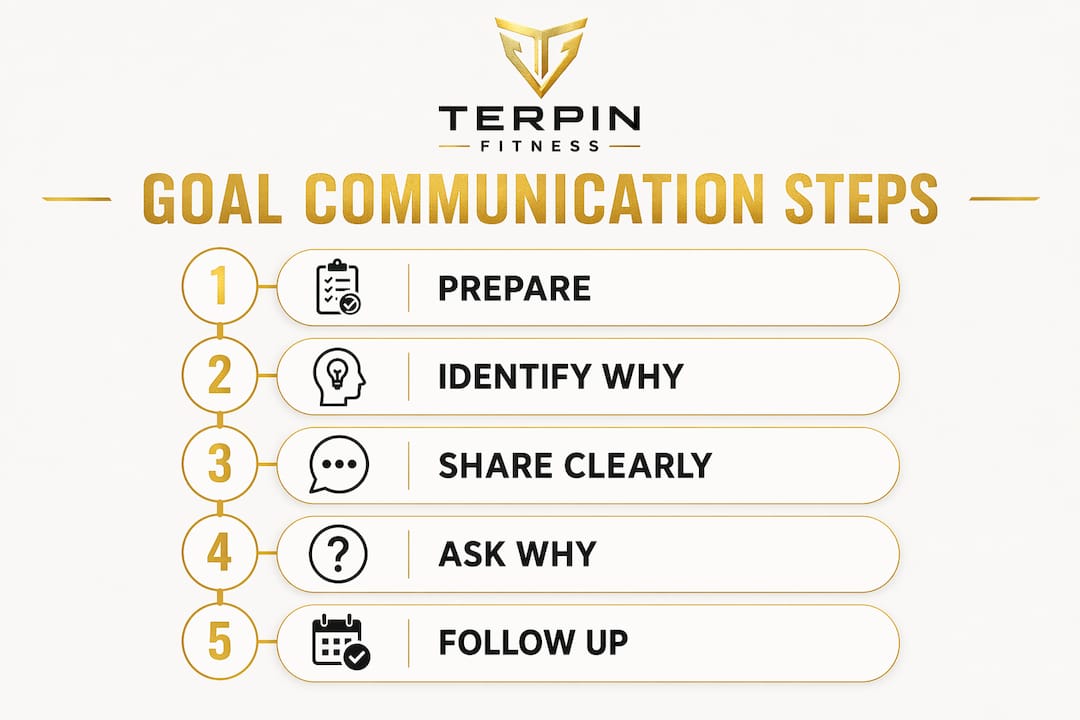
Start your first conversation by stating your primary goal, your timeline, and your biggest concern. Do not wait for your trainer to ask the right questions. Volunteer the information. If you have a bad knee, say so immediately. If you have tried weight training before and hated it, say that too. Trainers cannot design around problems they do not know exist.
The best clients treat their trainers as collaborators by asking “why” questions and sharing data. Asking “Why are we doing Romanian deadlifts instead of leg curls?” is not being difficult. It builds understanding, and understanding builds commitment. When you know why you are doing something, you are far more likely to do it correctly and consistently.
Set clear expectations for how you want to communicate between sessions. Clarifying communication preferences early, including frequency and contact type, prevents misunderstandings and keeps your program on track. Decide whether you prefer text check-ins, app messages, or email updates, and tell your trainer directly.
Follow these steps to make every goal conversation productive:
State your primary goal first. Lead with the outcome you care most about before adding context.
Share your emotional “why.” Tell your trainer what achieving this goal means to you personally.
Describe past attempts honestly. Explain what you tried to do before and why it did not stick.
List your limitations upfront. Injuries, time constraints, and equipment access all shape your program.
Ask about the plan. Request a brief explanation of how your trainer intends to structure your first four weeks.
Agree on check-in frequency. Decide together how often you will review progress and adjust the plan.
Pro Tip: Send a short message after your first session summarizing what you discussed and what you agreed on. This creates a written record both you and your trainer can refer back to when the plan needs adjusting.
How trainers use your goals to build a tailored training plan
A good trainer does not just hear your goals. They translate them into a structured program with measurable checkpoints. Industry best practice calls for onboarding new clients within 24 hours to cover medical history, goals, timeline, and lifestyle factors. That speed matters because early structure sets the tone for the entire relationship.
Trainers use your communicated goals to prioritize focus areas. Trying to address fat loss, strength, flexibility, and endurance simultaneously in week one overwhelms most clients. Experienced trainers focus on two or three priorities in early sessions to keep engagement high and build momentum before expanding scope.
Progress tracking is where goal communication pays off most visibly. Trainers measure progress through performance markers, body measurements, energy levels, and consistency, not just the scale. When you share that you slept poorly all week or that work stress has been high, your trainer can adjust load and recovery instead of pushing harder into a wall.
The table below shows how specific goal inputs translate into program decisions:
What you communicate | How your trainer responds |
“I want to lose 20 lbs in 4 months” | Sets weekly calorie deficit targets and tracks body composition monthly |
“I have lower back pain” | Avoids spinal loading exercises and adds core stability work |
“I can only train 3 days per week” | Designs full-body sessions to maximize frequency efficiency |
“I feel exhausted after sessions” | Reduces volume and checks sleep and nutrition habits |
“I want to run a 5K” | Adds progressive cardio blocks alongside strength work |
When progress stalls, a skilled trainer reassesses lifestyle factors like sleep and stress rather than simply increasing training load. That reassessment only works if you have been communicating those factors honestly throughout the program.
Common communication mistakes that limit your training results
Most training programs underperform not because the exercises are wrong, but because the communication broke down. Recognizing these patterns early saves you months of frustration.
Silently modifying exercises. Clients who quietly swap or skip exercises without telling their trainer lose personalized adjustments. Your trainer needs specific, timely feedback about effort and discomfort to adapt your plan safely.
Staying surface-level with goals. “I want to tone up” tells a trainer almost nothing. Goals without emotional context produce programs without personal relevance.
Dumping everything in session one. Sharing every health concern, past injury, and lifestyle detail in the first 20 minutes overwhelms the conversation. Prioritize the two or three factors that most directly affect your training.
Hiding lifestyle context. Withholding information about poor sleep, high stress, or a bad diet week prevents your trainer from making accurate adjustments. Your trainer is not judging your lifestyle. They are calibrating your program.
Waiting too long to give feedback. Feedback given three sessions after a problem started is less useful than feedback given the same day. Immediate, specific feedback about perceived exertion or pain helps trainers calibrate load and recovery in real time.
Assuming your trainer knows what you feel. Trainers observe movement and performance. They cannot feel your fatigue, your joint discomfort, or your motivation level. You have to say it.
The fix for all of these is the same: build a habit of transparent, specific, and timely communication. Treat every session as a data exchange, not just a workout.
Key takeaways
Communicating your goals clearly with your personal trainer is the most direct path to a program that fits your body, your schedule, and your real motivation.
Point | Details |
Prepare a written goal audit | Write down your goals, your “why,” and past attempts before your first session. |
Use SMART goals | Make goals specific, measurable, achievable, relevant, and time-bound for faster progress. |
Share lifestyle context | Tell your trainer about sleep, stress, and diet so they can adjust your program accurately. |
Give feedback immediately | Report discomfort or fatigue the same day, not sessions later, to prevent injury and plateaus. |
Treat your trainer as a partner | Ask “why” questions and share data to build a collaborative relationship that drives results. |
What I have learned from clients who finally got honest with their trainers
The single biggest shift I have seen in client results at Terpinfit did not come from a new exercise or a better diet plan. It came from clients who stopped being polite and started being honest.
One client spent six weeks doing workouts she found genuinely boring. She never said anything because she did not want to seem difficult. When she finally told me, I redesigned her program around movement she actually enjoyed, and her consistency went from two sessions per week to four. The program did not change that much. Her willingness to communicate did.
Written goal audits changed how I approach every new client. When someone hands me a page that explains what they want, why they want it, and what they have already tried, I can skip the guesswork and get to work. The clients who do this consistently get better programs faster. That is not an opinion. It shows up in their results within the first month.
The uncomfortable truth about sharing goals with a coach is that most people are afraid to say what they actually want. They worry about sounding vain, unrealistic, or high-maintenance. Your trainer has heard it all. The goal that embarrasses you is probably the goal that will drive your best effort. Say it out loud.
Training success depends on what you do in the 23 hours outside your sessions. That means owning your feedback, your motivation, and your honesty. Your trainer can only work with what you give them.
— Marc
Start your Terpinfit training with a plan built around your goals
Terpinfit offers both online and in-person personal training in Pensacola, Florida, with a structured onboarding process designed to capture your goals, your history, and your lifestyle from day one.

Every new client starts with a detailed intake process that covers medical history, training preferences, and goal timelines. That information goes directly into your program design. Terpinfit also offers online personal training for clients who need flexibility without sacrificing accountability. If you are ready to build a program around goals you have actually defined, visit the Terpinfit services page and fill out the inquiry form to get started.
FAQ
What should I tell my personal trainer in the first session?
Tell your trainer your primary goal, your timeline, any injuries or limitations, and your emotional reason for training. Written notes help you stay organized and give your trainer a concrete reference.
How do SMART goals help with trainer-client alignment?
SMART goals are specific, measurable, achievable, relevant, and time-bound. They give your trainer clear targets to build your program around and make progress easy to track objectively.
How often should I update my goals with my trainer?
Review your goals every four to six weeks or whenever your circumstances change significantly. Collaborative reassessment that accounts for lifestyle factors produces better adjustments than simply increasing training volume.
What happens if I do not share lifestyle factors like sleep or stress?
Your trainer will adjust your program based on performance data alone, which is incomplete. Sharing sleep quality, stress levels, and diet habits allows your trainer to calibrate load and recovery accurately.
Is it okay to ask my trainer why they chose specific exercises?
Asking “why” questions is one of the most productive habits a client can build. Clients who ask questions and share data are more likely to stay committed and see long-term results.
Recommended
Comments